Tag: writing

My disappearance from the blog = completed memoir revision

It’s been almost a month since I’ve written a blog post, and this is a trend that’s going to end this week. My wife thinks I don’t really care about this blog. But no! I have been busy working on my memoir. And if you’re a follower of my blog, then you know it’s my mission, my journey, my goal to publish this book. Almost a year ago, an agent suggested a revision. I’m please to announce that the revision is finally finished.

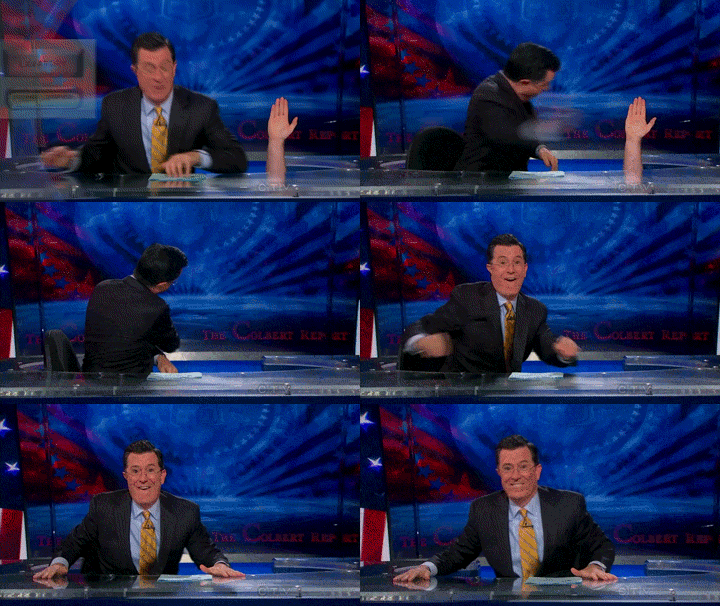
Colbert-High-Five

Well, at least this revision. I’ve been writing this book for almost eight years now.

To be honest, I’m not even sure if it’s the last revision. You know what, I can say for sure, no matter what happens from here, I will still be working and editing the book. But it feels good. Now the waiting begins.

DudeWaiting

It’s funny. As a writer, you need to learn to have extreme patience; you need to learn to accept all the things that are out of your control; and you need to learn confidence. Because there are so many ups and downs, so many periods of prolonged waiting, it’s essential to develop a strong belief in the self. I will make myself a white Russian — or two — as I’m waiting.

The Greatest Lesson I Learned from Rehab

I was in a rehab center from July, 2011 to July, 2012. Now, I didn’t end up in this facility in the traditional way. I wasn’t dealing with drug addiction; I wasn’t struggling with alcohol addiction; and I wasn’t seeking treatment. In fact, I’m being a bit coy here…I needed a job.

In May of 2011, I graduated from the MFA Program at Florida International University — have you heard about our great alumni: Richard Blanco, Dennis Lehane, Joe Clifford and Patricia Engel! — and I moved out to Southern California to live with Heron. I didn’t know anybody out in L.A. I bugged my teachers endlessly for contacts until they threw some names at me, and I cherished those names like lifeboats on a sinking ship.

262_511650695921_2407_n

Of course, when I moved out here, I reached out to those contacts, and I learned a lot from them and continue to benefit from their knowledge and experience, but I didn’t find a job…at least right away. So I scoured the city, looking for something to pay my rent and bills, and I came across an ad on Craigslist to teach creative writing at a rehab center. Well, I was a teacher, and I was a writer — Could there be anything better?

I applied and got the job. I couldn’t wait to start, but as you might have read before, I had to drive 44 miles through the worst traffic in the country from Long Beach to Woodland Hills. That’s beyond the point. I’m not here to bore you with the same story of transportation.

Well, after I started working at the rehab center, I realized the drive was killing me, and I wanted a job where I was writing more. I loved teaching, but I was dissatisfied and wanted to write all the time — or at least more and get paid for it. I became frustrated. I became anxious. I became impatient. Suddenly, I felt stuck in a situation.

Everyday I listened to the counselors talk about the steps and the Big Book, and initially all this jargon just washed over my head. What did I care? Of course, I wanted to help the kids — oh, more than anything in the world — but I wanted to teach them through words and writing and other sunshine bullshit that I still believe in.

b-1_4th

Then one day, something changed.

One of the counselors there — he was this huge guy with a mullet — caught my attention. He took me aside and basically told me to look around. Be a part of this team. You’re trying to run your own show, man. Be here with us. Be in the moment. That’s what this is about. You’re going to move onto something better soon, but for right now, be here, be with us.

He woke me up. I was so fixated on the next step, being a writer, and moving on that I wasn’t in the moment. I began to listen to him more when he spoke to the kids. He used to walk around the room, flicking his mullet, smacking kid on the back, hugging people who walked into the room. His personality was so large you couldn’t help but pay attention. And his mantra was always — be in the moment.

I’ll never forget this story he told about being in jail. He talked about being overwhelmed by the amount of time he had to serve. That it became impossible to not future trip and let your anxiety spin out of control. And he said the only thing that mattered, his only comfort, was that the second-hand on that clock kept ticking.

That was a really profound moment for me. Sometimes, I live like I’m in jail. No, I’m not comparing my life to an actual prison, but I’m saying that I can feel stuck; I can feel trapped; and I can forget about that second, that moment, because I’m so disconnected that my own impatience and ambition can be a trap. That’s the greatest lesson I learned. That I needed to struggle, to fight to be in the moment. To remind myself that this very next word is the next word I’m going to type and this very next thought is the next thought I’m going to think and this very next breath is the next breath. The rest, to a certain extent, is out of my control.

This was humbling. I’m an ambitious guy, and I’m never satisfied. But when I forget to focus on what’s in front of me, well, that’s when I slip up and lose control. How hard is it to be present? How hard is it to remember nothing in the future is guaranteed? How hard is to believe that the path you are on is guiding you to a place of happiness?

Judge These Book Covers: My 10 favorite book covers in my house

Heron’s sister and her friend came over this weekend and rearranged our house as a wedding gift. They put my books all around the house, and it provided a great opportunity to look at some of them I haven’t paid attention to in a while. So I decided to put together a list of my favorite book covers I currently have in my house. Now, I didn’t include art books, because I thought that would be unfair, and some of my books I gave away. But these are the books I find myself just admiring for the cover sometimes long after I had finished it.

10. Ernest Hemingway’s In Our Time — Trains and War and Masculinity 

photo

9. Friedrich Nietzsche’s Basic Writings — The “superman” on the cover looks like he’s actually the cause of earthquakes.

photo_7

8. Tom Wolfe’s The New Journalism — I found this rare book in a used bookstore in Ann Arbor, MI. Love the hand drawing the hand imagery.

photo_9

7. Jack O’Connell’s Word Made Flesh — A futuristic and twisted version of my home, Worcester, MA. 

photo_6

6. Henri Matisse’s Jazz — No, I’m not cheating. Matisse does write in this book, and it’s one of my favorite book covers — and books — of all time.

photo_8

5. Osip Mandelstam’s Stolen Air — This is a simple cover with a simple swirl, but it speaks so loudly, somehow, to Mandelstam’s poetry. 

photo_2

4. Raymond Carver’s Cathedral — If you’ve read the story, Cathedral, then you understand why this cover is so beautiful.  

photo_1

3. Charles Bukowski’s Ham on RyeImagining a young Bukowski always makes me laugh.  

photo_3

2. Philip Levine’s What Work Is — This photograph of the girl at work in a textile plant is haunting and glorious, just like this book.

photo_4

1. Mike Davis’ The Ecology of Fear — Los Angeles poking through the clouds.

photo_5

New piece at the L.A. Weekly — an interview with L.A. author Amelia Gray

Ever since I started working at my new job in public relations, I haven’t published anything new in the LA Weekly or the OC Weekly. In fact, I haven’t published any form of journalism since I was married. Honestly, starting a new job, planning a ceremony, writing a blog and a memoir have all sort of over taken over my life. Though I have been working on a larger piece for the LA Weekly book section, my interview with Amelia Gray was the first piece I had published in a bit.

And it felt great, because I was able to speak to an amazing writer and discuss with someone who is infinitely more successful than me. That’s always inspiring, because it reminds me that they were once where I am. And it’s a struggle; it’s a fight; it’s a ton of hard work to go to a place where Amelia Gray is currently standing: a PEN/Faulkner Award finalist. Wow, could you even imagine that? Well, check out the interview to see what it must feel like.

How I’ve learned I will always be a teacher

Tomorrow morning, I will be talking to some students at my former graduate school, Florida International University, where I used to teach composition and received my MFA in creative writing (one of the best programs in the country!). The class is English Composition 1102, and it’s taught by one of my friends and former colleagues. She’s always looking for new ways to reach her students. She believes that writing and rhetoric can change a student’s future and provide them with the skills necessary for success — even if they’re not an English major.

Miami Horizon

So tomorrow, I’m going to Skype into their class from my new office and tell them about how the skills they’re learning in comp class transferred into my job, my life, and my personality. And I’ve got to say, the lessons I used to teach my students (plus the lessons I learned on how to teach from my professors) has played a gigantic role in my life, but it’s impossible to ever measure.

Journaling and freewriting 

If you’ve ever been in my class — or you ever really got to know me — then you probably know that I write in a journal all the time. I have countless journals with my thoughts, my dreams, my visions, my story ideas, and they’re probably the most prize possessions I own, because I can look back on those books and understand that it is the material of my mind.

img801.jpg

Maybe that sounds strange. But when I was in graduate school, I took this pedagogy class with Kimberly Harrison. We read a bunch of theory, and I enjoyed it, but what I took away from the class, which impacts me everyday, is freewriting. Writing without thinking; writing without censoring; writing without blocking…searching, groping, hoping for some understanding to pop out of the page like a message from a dream.

In the most basic sense, learning to write write without judging was an important hurdle I had to overcome before I could actually communicate with others or myself. How often do we judge our writing? How often do we judge what we say in class? And how often do we stop from saying what we actually want because of fear? Well, freewriting taught me to believe in my words, to write them, to say them, and never look back.

Of course, this has some drawbacks. If I’m just saying whatever the hell I want, well, I’m probably going to say something stupid and offensive. But here’s another way I use freewriting: When I know I’m going into a difficult situation, when I know I have to talk to my boss about a sensitive issue, even when I know I have to talk to a loved one about a pressing matter, I write about it. I see what’s on my mind. I learn about myself. I learn about my fears. I learn about my thoughts. I learn about my insecurities. And what I’m really doing is strategizing by voyaging into myself.

You know, I could probably go on about all the things I’ve learned from teaching, but here’s something I’ve learned that seems important right now: Sometimes, you can plan an entire lesson down to the minute, but sometimes you just have to move on from that routine in order to find the point you wanted to make.

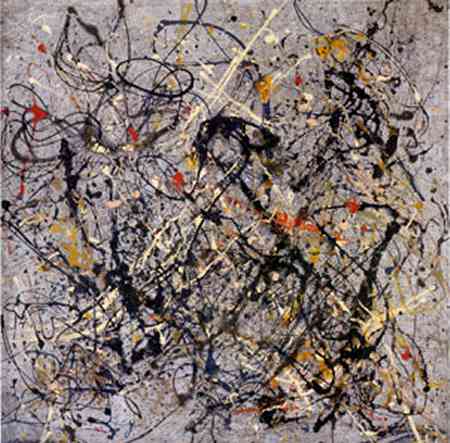
pollock.jpg

I’m getting married next week. Actually Saturday. I proposed to my lady, Heron, while I was teaching at FIU. Teaching, strangely, had a big part of this decision. And what I learned while teaching is that you always have to know your audience; you always have to know your genre; you always have to know your purpose.

Well, those are basic lessons for writing a paper, but those are the basic lessons for living a successful life. We teach our students to wallow in complexity, to not take the easy way out, and to find the right answer to complicated questions. And when I was trying to figure out if I was going to propose, I asked the same very questions I use to brainstorm a research paper.

So I looked at my life, and I wondered, who was the audience? Who was I living for? Ultimately, it was me, but it was my future wife. It was my dog. It was my family. It was my students. It was the voice I hear inside my head that tells what I’m doing is right or wrong.

And then I thought about the genre. What kind of a life did I want to live? Because I want to be a writer, part of me thought that I had to live some tragically beautiful life and suffer. I could have lived my life like a tragedy. I could have chosen to be alone and a wandering Gypsy. But no, I wanted to make my life another genre. I didn’t want to live a tragedy. I wanted to be happy. And I know what made me happy. I mean, I knew who made me happy.

And finally, I started to think about my purpose: The ultimate question. With my students, I asked, “What is it that you’re trying to accomplish in your paper?” With myself, I asked the obvious: What did I want out of life? And yes, life is tragically short, but I often imagine that when I die, I could be forced to watch my life on repeat, and back in graduate school, I knew that I wanted Heron to be in those scenes. I knew my purpose: to have an incredible family and be one hell of a writer.

Some might even say that being a writer and having a family is a paradox. But I’m the one writing this story.

Purpose, audience, and genre…